
Southeast Asia Grapples with Transnational Organized Crime in New UNODC Report
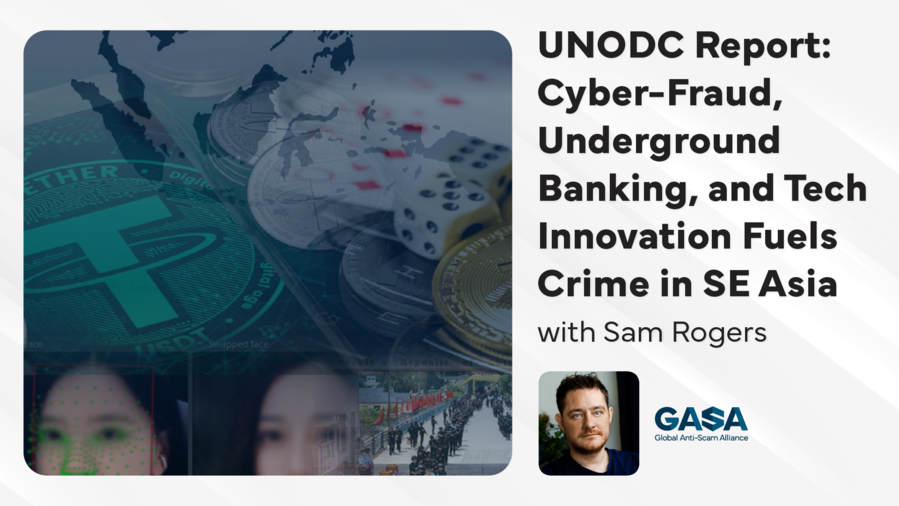
In its October 2024 report, Transnational Organized Crime and the Convergence of Cyber-Enabled Fraud, Underground Banking and Technological Innovation in Southeast Asia , the United Nations Office on Drugs and Crime (UNODC) paints a grim picture of increasingly sophisticated and dangerous threats. The report highlights the convergence of organized crime, financial innovation, and emerging technologies that are fueling cyber-enabled fraud and illicit economies across Southeast Asia. This shifting ecosystem has outpaced enforcement and regulatory efforts, creating a robust criminal economy capable of scaling operations globally.
For stakeholders invested in fighting scams, fraud, and other forms of organized crime, understanding this landscape is imperative. Southeast Asia has become a breeding ground for illicit operations due to a unique mix of underregulated financial systems, vulnerable border regions, and cutting-edge technological tools that criminal networks are quick to exploit.
The Context Behind the Convergence
Southeast Asia has long been an epicenter of transnational organized crime (TOC). However, the UNODC report reveals a paradigm shift where traditional crime models—such as drug trafficking and underground banking—are increasingly merging with cyber-enabled fraud.
This convergence is driven by multiple interconnected factors:
Economic Opportunities in Underregulated Markets : The region’s underregulated casinos, junket operations, and Special Economic Zones (SEZs) have become critical hubs for money laundering and illicit financial flows. High volumes of unmonitored transactions in cash-based systems allow organized crime groups to embed themselves in legal business ecosystems.
Technological Innovation : Criminals are leveraging blockchain, cryptocurrency, and artificial intelligence to innovate their operations. Cryptocurrencies like Tether (USDT) have become the primary vehicle for laundering funds, particularly within grey-market Virtual Asset Service Providers (VASPs).
Strategic Geographic Position : The region’s porous borders, coupled with political and economic instability, create environments where TOC thrives. Myanmar, Cambodia, and the Philippines, in particular, have become hotbeds of cyber-enabled fraud operations and human trafficking networks.
Law Enforcement Gaps : Governments across the region have struggled to keep pace with the increasingly professionalized nature of organized crime. Fragmented regulatory frameworks and enforcement capacity gaps allow these networks to shift operations seamlessly when threatened.
The result is an illicit economy generating billions annually. According to UNODC estimates, financial losses from scams targeting victims in East and Southeast Asia totaled between $18 billion and $37 billion in 2023 alone—a staggering figure that highlights the industrial scale of cyber-enabled fraud.
A "grey-market Virtual Asset Service Provider" (VASP), is an unauthorized or loosely regulated entity that operates in legal gray areas, often bypassing financial oversight and compliance measures
Industrial-Scale Operations See Criminals Go Pro
Once fragmented, cyber-enabled fraud in Southeast Asia has evolved into a consolidated, professionalized industry. Scam centers—often located in fortified compounds in Myanmar, Cambodia, and the Philippines—operate on an industrial scale, exploiting trafficked individuals as forced labor. These centers have become a global problem, targeting victims across borders while evading local authorities.
The UNODC identifies several key trends within this burgeoning criminal industry:
Professionalization of Fraud Operations : Fraud networks now operate like multinational corporations, complete with recruitment pipelines, advanced IT infrastructure, and supply chains for illegal tools. Platforms such as Telegram have become hubs for cybercrime service providers offering data harvesting, malware-as-a-service , and AI-powered fraud tools.
Integration of AI and Deepfake Technology : The use of generative AI and deepfakes has significantly enhanced fraud schemes. AI-generated content allows criminals to automate phishing attacks, impersonate victims with realistic fake identities, and even create convincing audio and video for scams like investment fraud, romance fraud, and sextortion.
Cryptocurrency and Money Laundering : Virtual assets are playing a pivotal role in cyber-enabled fraud. Criminal networks favor stablecoins like Tether (USDT) due to their liquidity and low transaction costs. These funds are laundered through high-risk VASPs, which operate in jurisdictions with weak oversight. The report highlights that between 2021 and 2024, a single Mekong-based VASP processed between $49 billion and $64 billion in cryptocurrency transactions, making it the largest service provider of its kind in the Asia-Pacific region.
Such developments have lowered the barriers to entry for organized crime groups, enabling smaller players to exploit technologies previously inaccessible to them. At the same time, larger, consolidated criminal networks now have the tools to scale operations globally, reaching victims far beyond Southeast Asia.
Underground Banking and Cryptocurrency: The Backbone of Illicit Economies
While cyber-enabled fraud has grabbed headlines, underground banking remains the backbone of Southeast Asia’s criminal economy. Traditionally reliant on physical cash flows and informal networks like
hawala
, underground banking systems have now embraced cryptocurrency.
Casinos, junket operations, and illegal online gambling platforms have historically served as conduits for laundering billions in criminal proceeds. The advent of cryptocurrency has further emboldened these networks:
High-Risk VASPs : Unauthorized VASPs have proliferated in vulnerable jurisdictions, facilitating the flow of illicit funds. These platforms offer services that blend licit and illicit transactions, making it challenging for authorities to differentiate between legitimate financial activity and money laundering.
Innovative Money Laundering Models : The report identifies sophisticated techniques such as “gambling-based money laundering” where illicit funds are placed into online betting platforms, layered through bets, and integrated into the formal economy as “winnings.”
Cryptocurrency Adoption : Stablecoins have become the preferred medium for laundering money due to their stability and cross-border functionality. For example, TRON-based Tether (USDT) is particularly popular among Asian crime syndicates.
The lack of coordinated regional oversight and enforcement has allowed these systems to flourish. With regulatory gaps persisting, criminals can operate with near impunity, moving value across borders and exploiting weak financial systems.
A Global Problem with Regional Roots
The UNODC’s findings are a wake-up call. Southeast Asia’s booming illicit economy, driven by cyber-enabled fraud, underground banking, and technological innovation, is no longer a regional problem—it is a global crisis. The convergence of these elements has created a criminal ecosystem that thrives on impunity, innovation, and scale.
As highlighted by both the UNODC and GASA’s Asia Scam Report and Global State of Scams Report 2024 , the situation demands immediate, coordinated action. Governments, regulators, and international partners must respond with equal urgency and innovation. Addressing these challenges requires more than enforcement; it demands a multi-sector approach that combines policy reform, technological solutions, and victim protection.
Southeast Asia stands at a crossroads. The path forward will determine whether the region becomes a model for countering organized crime or a cautionary tale of unchecked criminal innovation.
You can read the UNODC's Transnational Organized Crime and the Convergence of Cyber-Enabled Fraud, Underground Banking and Technological Innovation in Southeast Asia here.
Global Anti-Scam Summit America 2026: Highlights, Insights and Resources
Explore GASS America 2026 highlights and insights, with the Summit summary, photos, presentation slides, transcripts and session recordings from San Francisco.
State of Scams in Kenya 2026: A Comparative Review Across Africa
Kenyan experts examine scam trends, data sharing, digital trust and the need for stronger cross-sector prevention.
State of Scams in South Africa 2026: A Comparative Review Across Africa
South African experts examine scam trends, AI, consumer protection and the need for stronger cross-sector collaboration.
-3.jpg)
More than one in five adults in Japan encountered scams in the past year
New State of Scams Japan 2026 report examines how scams are reaching consumers and where stronger prevention and collaboration can make a difference

GASA Brings Stakeholders Together in Brussels for First Europe Chapter Meeting
GASA Europe brings 50+ stakeholders together in Brussels to discuss scam trends, data sharing and cross-sector priorities.

Research Working Group Meeting: Fraudulent Tickets and Robocall Scam Tactics
Research presented to GASA examines consumers’ ability to spot fraudulent tickets and tactics found across 4.49 million scam and spam robocalls.
-2.jpg)
Fighting Fraud Without Borders: Cross-Regional Collaboration in Latin America and Beyond
A roundtable at GASS America examined cross-regional collaboration in Latin America and beyond, focusing on fraud prevention, consumer protection and response.
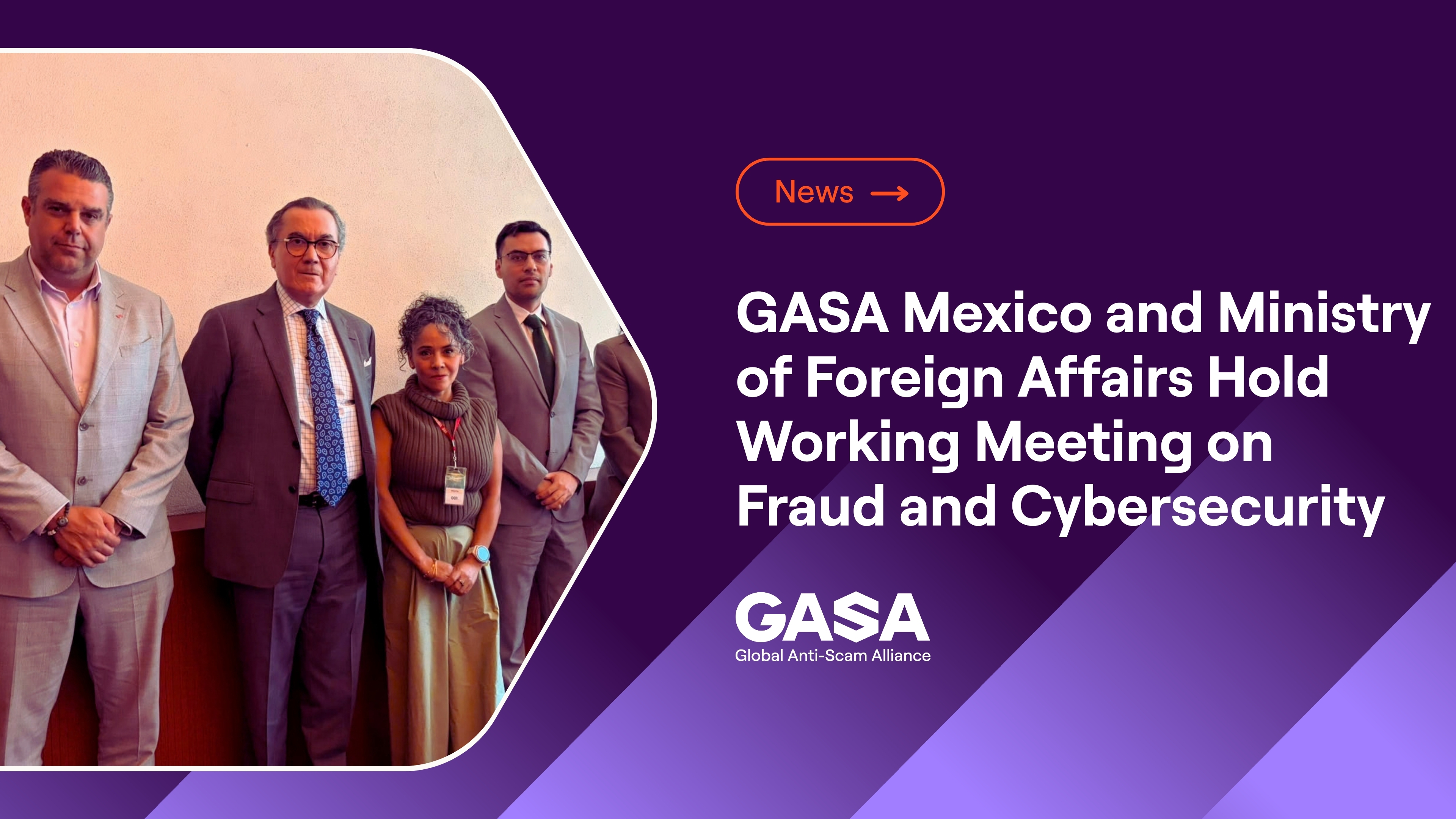
GASA Mexico and the Ministry of Foreign Affairs Hold Working Meeting Ahead of the Chapter’s Annual Forum, “From Coalition to Action”
GASA Mexico and the Ministry of Foreign Affairs convened Mastercard and Scotiabank to discuss fraud, cybersecurity, information sharing and emerging technologies.