
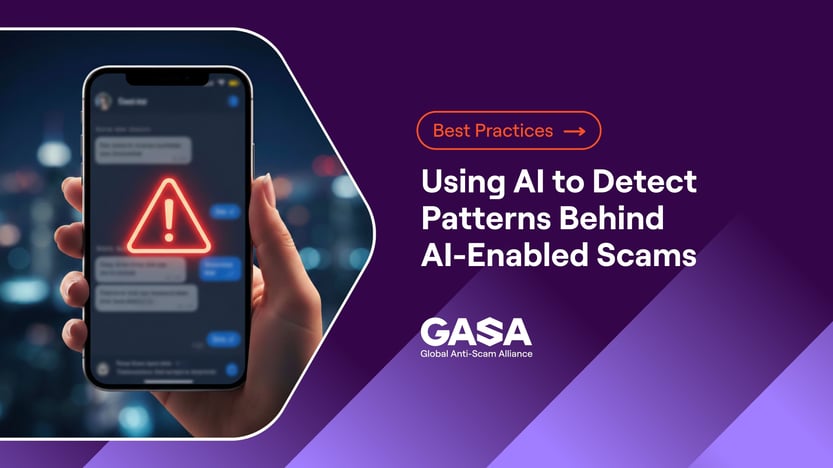
Digital scams now operate at the same speed as modern communication. Messages, calls, links, and impersonation attempts can reach individuals almost instantly, often across multiple channels at once. As social engineering tactics become more sophisticated and increasingly shaped by generative AI , traditional signature-based security controls face growing limitations.
This shift is prompting security providers and platforms to reconsider scam prevention not as a static filtering exercise, but as an ongoing process that combines detection, interpretation, and user support in real time. Some providers are responding by placing greater emphasis on behaviour-driven and context-aware defences .
Bitdefender illustrates this approach through systems to analyse behavioural patterns, assess contextual signals, and provide user-facing tools that help people evaluate potential risks as they arise.
Why Scam Prevention Requires Real-Time, Context-Aware Defence
Scam tactics change frequently. Scripts, delivery methods, and emotional triggers evolve as criminals exploit current events, trending topics, and emerging technologies such as voice cloning and deepfake video.
Static blocklists and basic keyword filters can address only a limited subset of these threats. Once a scam reaches a user, the opportunity to intervene may be measured in minutes or even seconds . This places increased importance on rapid detection and on responses that are understandable to non-technical users, many of whom may be under emotional pressure.
This broader shift towards real-time analysis reflects an effort to focus less on known malicious indicators and more on how scams behave . Behavioural signals, language structure, framing of links, and tactics used to manipulate trust can provide insight into emerging scam activity, even when individual messages do not match previously identified patterns.
Using Behavioural and Contextual Intelligence to Detect Scams
A key challenge in scam detection is that many messages appear legitimate at first glance. Rather than containing obvious malware or links associated with known threats, they often rely on urgency, authority, fear , or emotional manipulation .
To identify these patterns, Bitdefender uses machine learning models trained on large volumes of scam-related data, analysing:
-
Text messages and emails that follow common social-engineering structures.
-
Links and QR codes used in scam campaigns.
-
Voice-based scams , including those involving AI-generated audio.
-
Impersonation tactics and forms of deepfake-enabled deception.
To support this analysis, dedicated monitoring environments are used to study voice, email, and text-based scams. These settings allow researchers to observe scam scripts, timing, and techniques under controlled conditions. Insights from this research are used to update detection models and support more timely identification of emerging scam campaigns.
Rather than relying solely on known indicators, this approach reflects a broader shift towards interpreting how scams operate in practice, including how they adapt to different channels, audiences, and moments of vulnerability.
“As scammers adopt generative AI, the window for prevention is shrinking. Defensive approaches need to be just as adaptive, with a focus on building user resilience. Behaviour-based and context-aware detection allows us to respond quickly to new scam techniques, even when attackers change scripts, voices, or delivery methods.”
Alina Daniela Bizga
Security Analyst, Bitdefender
Supporting Users at the Moment Risk Appears
Beyond detection and monitoring, scam prevention also depends on how users understand and respond to risk. Detection alone does not necessarily prevent harm if users are unsure how to interpret warnings or signals. Scam victims often act while under pressure, believing they are responding to a trusted organisation, helping a family member, or following urgent instructions from an apparent authority figure.
In response, security providers are placing greater emphasis on user-facing support at the point where risk becomes apparent. One example is Scamio , a free AI-powered service from Bitdefender that allows users to submit suspicious messages, links, QR codes, or descriptions of situations in natural language and receive guidance on whether the content shows common signs of a scam.
Scamio Pro extends this functionality by providing conversational guidance, regional Scam Wave Alerts , and context-based explanations rather than technical warnings alone.
These tools are designed to lower the barrier to verification by allowing users to seek clarification without requiring detailed security knowledge. The focus is on providing clear, practical feedback at moments when users may otherwise act without verification.
Developing real-time scam prevention capabilities involves challenges beyond technical detection. These include managing large volumes of rapidly changing data , updating models as tactics evolve, balancing detection accuracy with false positives, and communicating risk without causing unnecessary alarm . Scam prevention also involves emotional and psychological considerations..
What This Means for Scam Prevention More Broadly
Scam prevention is gradually shifting away from reactive, after-the-fact responses towards earlier intervention. Approaches increasingly combine behavioural and contextual analysis, real-time detection across multiple channels, research into evolving scam techniques, and tools that help users understand risk in accessible terms.
As scam tactics continue to evolve and AI-enabled deception becomes more sophisticated, adaptability, real-time insight, and informed user decision-making are likely to remain central considerations in efforts to reduce harm across digital ecosystems.
Sign up to the GASA newsletter for regular updates on scam prevention, research, and best practices.

What Really Works in Preventing Fraud Against Older Adults | Research Working Group Meeting
GASA’s Research Working Group explores evidence-based ways to prevent fraud against older adults and close research gaps.
Measuring What Matters: The New Methodology Behind the 2026 State of Scams Reports
Learn how GASA updated the 2026 State of Scams methodology with stricter validation, data cleaning, and loss calculations to estimate scam harm more accurately.

Brazil Introduces New Digital Protections for Minors
Brazil’s new digital statute strengthens protections for minors through platform design controls, age assurance measures, and regulatory enforcement.

Romance Scams in Brazil: Warning Signs and Prevention
Experts from Brazil discuss how romance scams work, their emotional impact, and how victims can protect themselves online.

De Viena a la Acción: GASA México y UNODC México Cierran Brechas Operativas
GASA México y UNODC México formalizan un Acuerdo de Intercambio de Comunicaciones, convirtiendo los compromisos globales de Viena en acción coordinada contra el fraude.

What the UN Global Fraud Summit Discussions Tell Us About What Comes Next
Watch expert discussions from the UN Global Fraud Summit on the industrialisation of fraud, global collaboration, public–private frameworks, and next steps for implementation.

Game Over for Scammers: Regional Defenses Against Online Gambling–Related Scams
Experts from INTERPOL, ACMA, and DGOJ examine how gambling-related scams operate and how global enforcement is responding.
What 22,000 Fraud & Cyber Crime Operator Signals Reveal About the State of Bank Attacks
Falkin's analysis of 22,661 fraud operator signals shows how bank attacks are evolving across regions, typologies, and AI-driven scam infrastructure.