
The Global Anti-Scam Alliance (GASA) , in partnership with Cifas , has released the 2024 State of Scams in the United Kingdom report, providing critical insights into the evolving landscape of fraud and scams affecting the UK. With responses from 2,000 Britons, the report highlights both progress and ongoing challenges in combating fraud, revealing the urgent need for collective action across industries to tackle the growing threat.
Key Findings from the 2024 State of Scams the in the United Kingdom Report
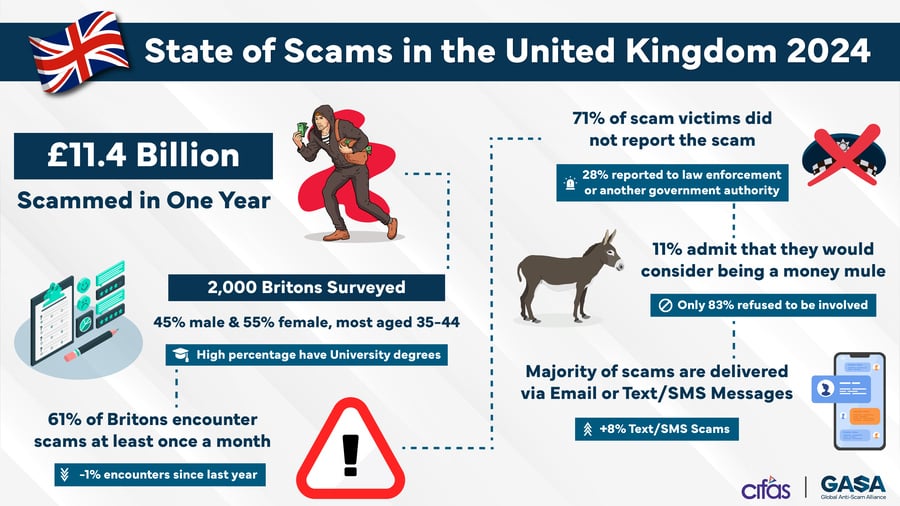
£11.4 Billion Lost to Scams : Scams accounted for 0.4% of the UK's GDP, with the average loss per victim standing at £1,443 (US$1,818).
High Scam Prevalence : 61% of Britons encounter scams monthly, with 52% reporting an increase in scam activity over the past year.
Rising Sophistication : Scammers increasingly use AI tools to generate realistic texts, images, and even voices to deceive victims.
Decline in Reporting : 71% of Britons do not report scams, up 5% from 2023, highlighting a growing distrust in law enforcement's ability to address these crimes.
Most Common Scams : Shopping scams remain prevalent, while investment scams continue to rise, exploiting victims through credit cards, bank transfers, and online payment platforms.
Emotional and Psychological Toll : 53% of victims report a strong emotional impact, a 7% increase from last year, underscoring the human cost of fraud.
AI, Social Media, and Underreporting Pose Challenges in UK
The use of artificial intelligence (AI) in scams is rapidly expanding, enabling fraudsters to craft highly convincing schemes that manipulate victims through realistic emails, chats, and even deepfake videos. This has fueled an 8% rise in SMS scams and a 12% increase in Facebook scams , with scammers exploiting trusted platforms to reach their targets.
Underreporting remains a critical issue, with 71% of victims not reporting scams due to frustration with complex processes or lack of trust in authorities. This gap in reporting not only leaves victims unsupported but also hampers efforts to track and disrupt scam networks.
Financial and Emotional Costs of Scams as Online Trust Plummets
The report paints a sobering picture of the financial losses caused by scams. At £11.4 billion annually, scams are draining significant resources from individuals and the economy. Victims often face an uphill battle in recovering funds, with only 18% managing to recover their losses —a concerning 15% decrease from 2023.
In addition to financial losses, scams take a heavy emotional toll, with over half of respondents reporting feelings of distress, shame, and anxiety after being targeted. These impacts are compounded by the loss of trust in online platforms, with 60% of Britons expressing reduced confidence in using the internet.
UK Shows Positive Developments in the Fight Against Fraud
Despite the challenges, 2024 has brought hopeful developments in the UK’s fight against scams:
Appointment of a Fraud Minister : The UK’s first Fraud Minister, Lord Hanson, is tasked with leading national efforts to combat scams and bring fraudsters to justice.
New Payment Rules : The Payment Systems Regulator introduced mandatory 50:50 reimbursement rules for Authorised Push Payment (APP) fraud , incentivizing banks to strengthen their fraud prevention systems.
Innovative Tools : From Virgin Media O2’s “AI Daisy” scam disruption tool to the Check a Website service developed by GASA and supported by Cifas, technology is playing a key role in empowering consumers to detect and avoid scams.
Mike Haley , CEO of Cifas, emphasized the importance of collaboration:
“Scams are a systemic threat that undermine trust in our economy and society. Tackling this issue requires leadership, innovation, and collective action. With stronger public-private partnerships and a commitment to sharing intelligence across sectors, we can disrupt scams at their source.”
What Needs to Be Done? Recommendations for a Scam-Free UK
The 2024 State of Scams in the United Kingdom report outlines actionable steps to combat the persistent threat of fraud:
Strengthen Public Education : Launch nationwide campaigns to raise awareness of scam tactics, particularly those leveraging AI and social media.
Simplify Reporting Processes : Create user-friendly reporting systems to encourage victims to come forward and provide law enforcement with actionable intelligence.
Enhance Recovery Support : Improve fund recovery mechanisms for victims, ensuring that scammers cannot profit from their crimes.
Collaborate Across Industries : Foster stronger partnerships between banks, tech platforms, telecom providers, and government agencies to share data and disrupt scams at every stage.
Hold Tech Platforms Accountable : Push for greater responsibility from social media and online platforms to detect and prevent scam activity.
As Jorij Abraham , Managing Director of GASA, notes:
“The UK has taken promising steps this year, but the scale of the problem demands even greater action. Scams are not just a financial crime; they are an attack on trust and security in our society. Together, we must intensify our efforts to protect citizens and restore confidence in the digital world.”
This report is a call to action for all stakeholders—governments, businesses, and individuals—to unite in the fight against scams. By implementing the recommended strategies and fostering innovation, the UK can lead the way in creating a safer, more secure digital environment for its citizens.
📥 Download the full report now to learn more: https://www.gasa.org/research
Together, we can turn the tide on scams.
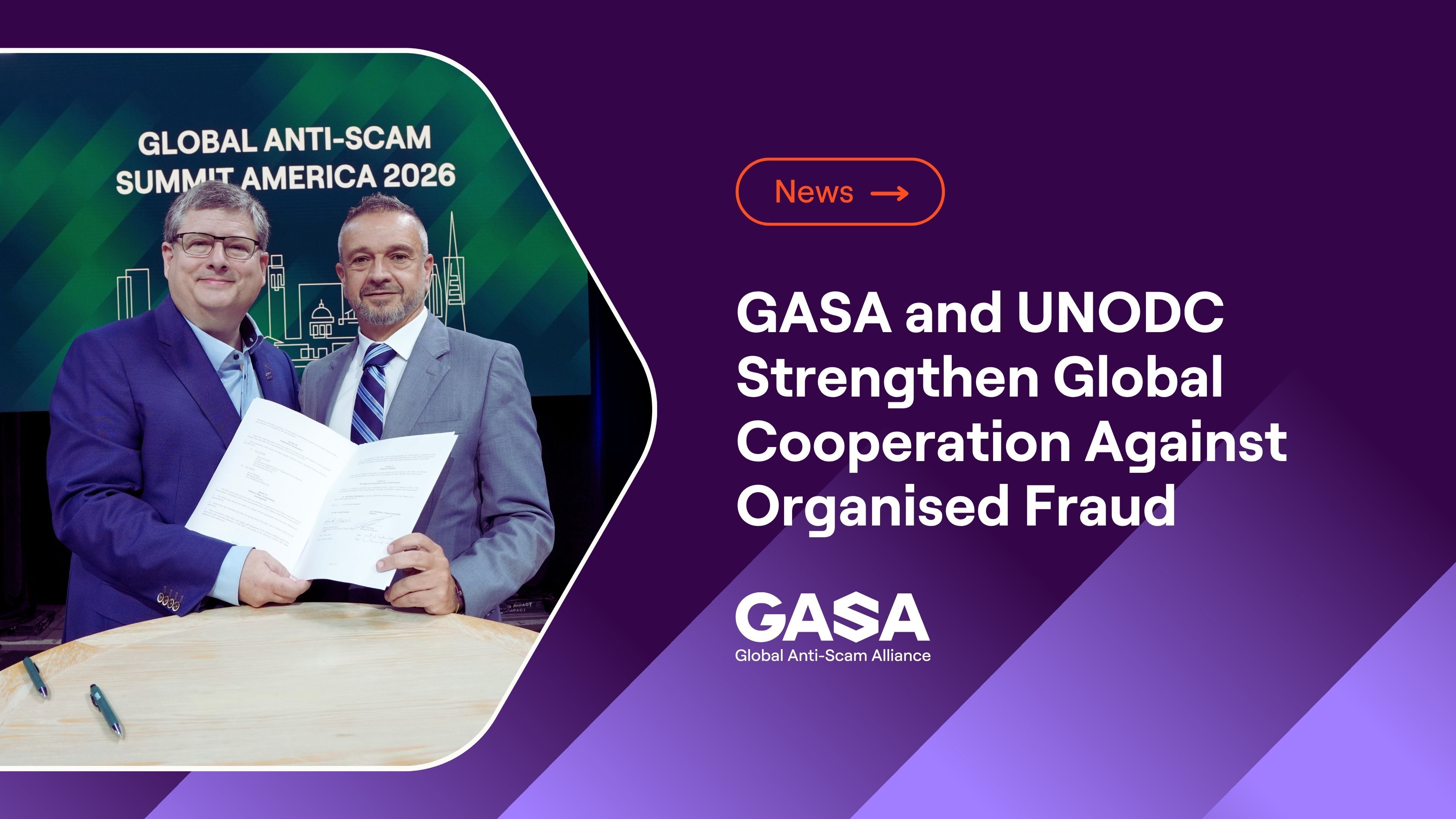
GASA and UNODC Partner to Strengthen Global Response to Organised Fraud
GASA and UNODC sign an MoU to strengthen international cooperation on fraud prevention, research, criminal justice responses and awareness.
Meet the Winners – Scam Fighter Awards at the Global Anti-Scam Summit America 2026
Meet the winners of the Scam Fighter Awards at the Global Anti-Scam Summit America 2026 and learn about their work in education, research, collaboration and technology.
From Information Sharing to Intelligence Production: GASA Mexico in Forbes
Sissi de la Peña, Director of the GASA Mexico Chapter, examines in Forbes México what the U.S. memorandum on cyber operations against fraud networks means for the country.
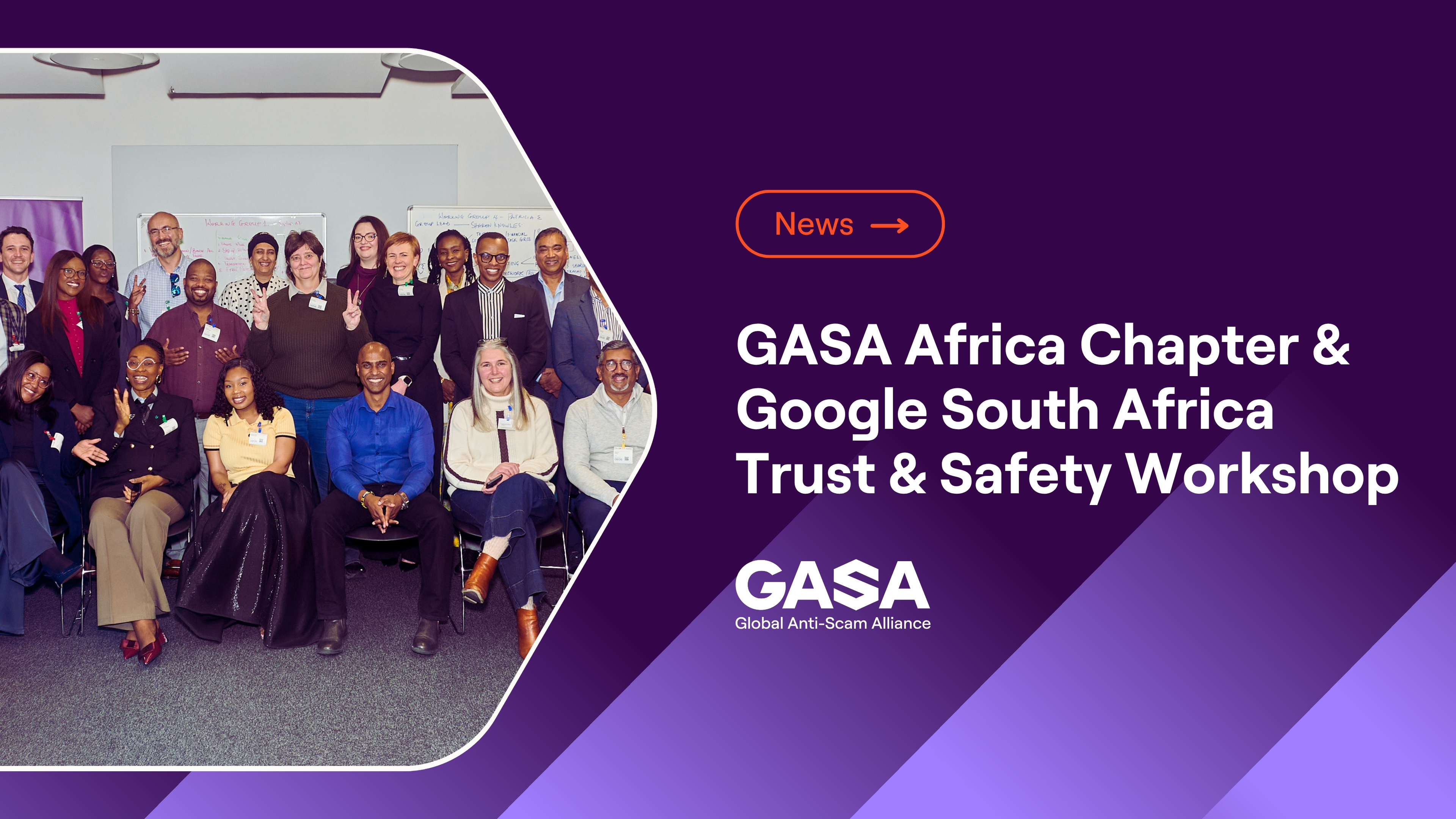
GASA and Google Trust & Safety Workshop Sets Priorities for Anti-Scam Cooperation Across Africa
GASA Africa Chapter and Google South Africa brought anti-fraud leaders together to strengthen cross-border cooperation and scam prevention.
Allstate Identity Protection Joins the Global Anti-Scam Alliance to Strengthen the Fight Against Scams and Identity Theft
Allstate Identity Protection has joined the Global Anti-Scam Alliance (GASA) as a Corporate Member within the North America Chapter.
GASA and Whoscall Release 2026 Asia Scam Report – Taiwan
The 2026 Asia Scam Report – Taiwan, provides an in-depth look at scam exposure, channels, victim experiences, and scam awareness among people in Taiwan.
BanCoppel joins the Global Anti-Scam Alliance to bolster fraud prevention and safeguard individuals entering the banking system.
BanCoppel has joined the Global Anti-Scam Alliance (GASA) as a Corporate Member of the GASA Mexico Chapter.
The emotions scammers exploit: how social engineering influences our decisions
How scammers use fear, urgency, excitement and trust to influence decisions, and how recognising these tactics can help people prevent fraud.